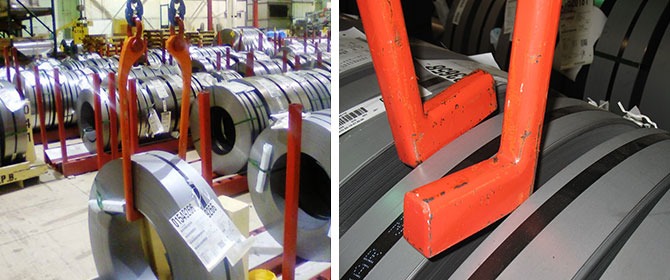
Steel Coil Grabbers & Coil Lifters are essential material handling tools used in industries that deal with heavy steel coils such as manufacturing, steel processing, automotive, and warehousing. These devices are specifically designed to lift, move, and position large cylindrical steel coils safely and efficiently using cranes, forklifts, or overhead lifting systems. Since steel coils are extremely heavy and often difficult to handle due to their shape and size, specialized lifting equipment is necessary to reduce risks, improve productivity, and ensure workplace safety.
In modern industrial operations, Steel Coil Grabbers & Coil Lifters play a crucial role in streamlining logistics and reducing manual handling. They are engineered to grip coils securely from the inner or outer diameter, allowing controlled lifting and transportation across production facilities or storage yards.
Understanding Steel Coil Handling Equipment
Steel coils are typically used in sheet metal production and are stored in large, tightly wound rolls. These coils can weigh several tons, making them impossible to move manually. Standard lifting equipment is not suitable because coils can roll, slip, or become unbalanced during movement.
This is where coil handling equipment becomes necessary. Steel Coil Grabbers & Coil Lifters are designed to stabilize and secure coils during lifting. They distribute weight evenly and ensure that the coil remains in a fixed position throughout the lifting process. This reduces the risk of accidents, product damage, and equipment failure.
These tools are widely used in steel mills, warehouses, shipping yards, and fabrication plants where frequent coil movement is required.
How Steel Coil Grabbers Work
Steel coil grabbers operate using mechanical, hydraulic, or electromagnetic systems depending on the design and application. The most common types work by gripping the inner diameter of the coil using expanding mandrels or lifting arms.
Once inserted into the coil’s core, the grabber expands to create a firm grip. This allows the crane or lifting machine to safely raise the coil without slippage. Some advanced models also feature rotation control systems that help in positioning the coil precisely during loading or unloading.
Coil lifters, on the other hand, may use clamps or C-hooks that support the coil from the outside. These tools cradle the coil securely while maintaining balance during transport.
Types of Coil Lifters
There are several types of coil lifting equipment used across industries, each designed for specific applications and coil dimensions.
Internal Coil Grabbers
Internal coil grabbers are inserted into the eye of the coil. Once inside, they expand outward to grip the inner walls securely. These are ideal for handling tightly wound coils and are commonly used in automated systems.
External Coil Lifters
External lifters use a hook or clamp mechanism that supports the coil from the outside. These are often used when internal access is not possible or when coils are stacked closely together.
C-Hooks
C-hooks are one of the most widely used forms of Steel Coil Grabbers & Coil Lifters. They feature a curved arm that slides under the coil and lifts it from the center. Their simplicity and durability make them popular in heavy-duty applications.
Electromagnetic Lifters
These lifters use magnetic force to pick up steel coils. They are highly efficient and reduce the need for physical contact with the coil, but they are only suitable for ferromagnetic materials.
Hydraulic Coil Lifters
Hydraulic lifters provide strong gripping force and are often used for extremely heavy coils. They offer high precision and control, making them ideal for complex industrial environments.
Key Features and Design Considerations
When designing or selecting Steel Coil Grabbers & Coil Lifters, several important features must be considered to ensure performance and safety.
One of the most critical factors is load capacity. The equipment must be capable of handling the maximum weight of the coils without deformation or failure. Material strength is also essential, with high-grade steel commonly used for durability and resistance to wear.
Another important feature is grip security. The lifter must hold the coil firmly to prevent slipping during movement. Adjustable mechanisms are often included to accommodate coils of different diameters.
Ease of operation is also important, especially in high-volume production environments. Many modern coil lifters are designed for automated or semi-automated operation to reduce manual intervention.
Applications in Industry
Steel Coil Grabbers & Coil Lifters are widely used across multiple industries. In steel manufacturing plants, they are essential for moving raw and processed coils between production stages. In automotive manufacturing, steel coils are used to produce body panels and structural components, requiring frequent handling.
Warehousing and logistics companies also rely on coil lifters to store and transport steel products efficiently. Shipping ports use these tools to load and unload coils from cargo ships safely.
In construction-related industries, steel coils are often used in roofing and structural applications, making efficient handling equipment necessary for timely project completion.
Safety Benefits
One of the biggest advantages of using Steel Coil Grabbers & Coil Lifters is improved workplace safety. Manual handling of steel coils is extremely dangerous due to their weight and instability. Improper lifting can lead to serious injuries or damage to materials.
By using specialized lifting equipment, workers are kept at a safe distance from heavy loads. The risk of coil slippage, rolling, or falling is significantly reduced. Additionally, modern lifters are equipped with safety locks, overload protection systems, and automated controls that further enhance safety.
These tools also reduce fatigue among workers by eliminating the need for manual lifting, which leads to a more efficient and safer working environment.
How to Choose the Right Coil Lifter
Selecting the right coil handling equipment depends on several factors. The first consideration is the size and weight of the coils being handled. Different lifters are designed for light, medium, or heavy-duty applications.
The type of coil storage also matters. If coils are tightly stacked or placed in confined spaces, internal grabbers may be more suitable. For open storage areas, external lifters or C-hooks may be more efficient.
Another important factor is the level of automation required. Some industries benefit from fully automated systems, while others may prefer manual or semi-automatic solutions.
Durability, maintenance requirements, and compatibility with existing lifting equipment should also be evaluated before making a purchase.
Maintenance and Best Practices
Proper maintenance is essential to ensure the long-term performance of Steel Coil Grabbers & Coil Lifters. Regular inspections should be conducted to check for wear and tear, especially on gripping components and load-bearing structures.
Lubrication of moving parts helps maintain smooth operation and prevents mechanical failure. Any signs of deformation, cracks, or corrosion should be addressed immediately to avoid accidents.
Operators should also be trained in proper usage techniques to ensure safe and efficient handling. Following manufacturer guidelines and safety standards is crucial for maintaining operational reliability.
Conclusion
Steel Coil Grabbers & Coil Lifters are indispensable tools in industries that handle heavy steel coils. They provide a safe, efficient, and reliable way to lift and transport massive loads that would otherwise be impossible to manage manually. With various types available, including internal grabbers, C-hooks, hydraulic systems, and electromagnetic lifters, industries can choose solutions tailored to their specific needs.
By improving safety, increasing productivity, and reducing manual labor, these devices have become a cornerstone of modern industrial material handling systems. Proper selection, usage, and maintenance ensure that they continue to deliver optimal performance in demanding environments.