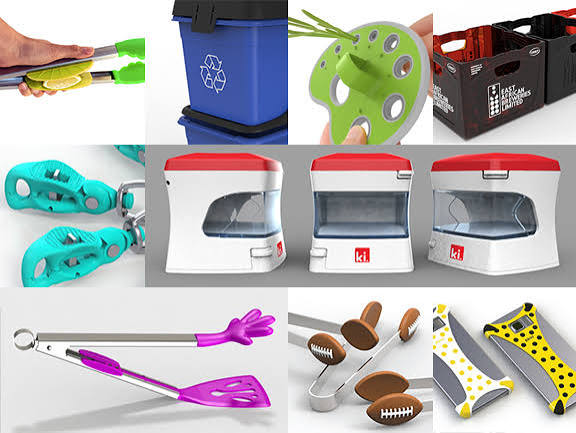
Bringing a new consumer product to market is an exciting process, but transforming an idea into a successful product requires much more than creativity. A concept may look promising on paper, yet practical challenges Consumer Products Prototypes can emerge when it is turned into a physical product. This is where Consumer Products Prototypes play an important role. Prototyping allows designers, engineers, and businesses to transform concepts into tangible models, evaluate their performance, identify weaknesses, and make improvements before investing heavily in manufacturing.
From household products and electronics to personal accessories and innovative lifestyle solutions, prototypes help companies reduce development risks while improving product quality. With modern rapid prototyping technologies, businesses can move from an initial idea to a functional product much faster and more efficiently.
What Are Consumer Products Prototypes?
Consumer product prototypes are physical or digital versions of a product concept created during the development process. A prototype may represent the product’s appearance, functionality, size, materials, or user experience. Depending on the project’s goals, it can range from a simple visual model to a fully functional prototype that closely resembles the final product.
The main purpose of prototyping is to test an idea before moving into mass production. Designers can evaluate how a product looks and feels, while engineers can examine its structure, functionality, and performance. This process provides valuable information that cannot always be discovered through drawings, computer models, or theoretical planning alone.
Why Prototyping Matters in Product Development
Developing a consumer product without testing a physical prototype can create significant risks. Manufacturing errors, uncomfortable designs, poor material choices, and functional problems can become expensive to correct once production has started.
Prototypes provide an opportunity to discover these issues early. Instead of waiting until the final manufacturing stage, companies can test different versions and make changes while development is still flexible.
Reducing Development Risks
One of the biggest advantages of prototyping is risk reduction. A prototype can reveal problems related to dimensions, assembly, durability, usability, or functionality. Identifying these issues early helps businesses avoid expensive redesigns and production delays.
Improving Product Design
Prototyping also supports continuous design improvement. A designer might create several versions of a product with different shapes, materials, controls, or features. Comparing these versions makes it easier to determine which solution provides the best combination of appearance, performance, and usability.
Understanding User Experience
A product must work well for the people who will actually use it. Prototypes allow businesses to conduct user testing and gather practical feedback. Test users can interact with a physical model and provide insights about comfort, convenience, operation, and overall experience.
The Consumer Product Prototyping Process
Creating a successful prototype generally involves several stages. Each stage contributes to transforming an initial concept into a refined and manufacturable product.
Concept Development
The process begins with an idea. Designers define the product’s purpose, target audience, important features, and expected benefits. Sketches, diagrams, and digital models can then be used to communicate the initial concept.
At this stage, the focus is on understanding what the product should accomplish rather than creating a perfect final design.
3D Modeling and Engineering
Once the basic concept has been established, designers and engineers can develop detailed 3D models. Computer-aided design software allows teams to examine dimensions, components, connections, and overall geometry.
Digital modeling makes it possible to modify designs quickly. Engineers can also identify potential interference between components and make structural improvements before producing a physical prototype.
Prototype Production
After the design has been prepared, the physical prototype can be manufactured. Depending on the product and development stage, technologies such as 3D printing, CNC machining, vacuum casting, or other rapid manufacturing methods may be used.
The appropriate method depends on factors such as material requirements, production quantity, surface finish, precision, and functionality.
Testing and Evaluation
Testing is one of the most important stages of prototyping. The prototype may be evaluated for strength, durability, functionality, appearance, ergonomics, and ease of use.
For products containing moving or electronic components, functional testing can help determine whether the product performs as intended. User testing can provide additional feedback that technical testing alone may not reveal.
Refinement and Iteration
Very few products are perfect after the first prototype. Developers typically make adjustments based on testing results and produce improved versions.
This iterative approach allows teams to gradually refine the design. Changes may include modifying dimensions, improving component placement, selecting different materials, simplifying assembly, or adjusting the product’s appearance.
Technologies Used for Consumer Product Prototypes
Modern prototyping offers businesses a variety of manufacturing technologies. 3D printing is particularly popular because it enables designers to produce complex shapes quickly without requiring expensive tooling.
CNC machining is another useful option when prototypes require high dimensional accuracy or stronger materials. It can produce components from materials such as plastics, aluminum, and other machinable materials.
Vacuum casting can be useful when companies need multiple prototype parts with properties and appearances that closely resemble injection-molded products. The choice of technology should always be based on the specific requirements of the product.
Benefits of Rapid Prototyping
Rapid prototyping has changed how consumer products are developed. Traditional manufacturing methods can require considerable preparation before a sample is produced. Rapid technologies can significantly shorten this process.
Faster prototyping allows companies to test more design variations within a shorter development cycle. This can lead to better products while reducing the time required to reach the market.
Another major advantage is cost efficiency. Although creating prototypes requires an investment, it can prevent much larger expenses caused by manufacturing defective products or discovering design problems after production begins.
From Prototype to Market-Ready Product
A prototype is not necessarily the final product. Before entering mass production, the design must be carefully reviewed for manufacturability, material selection, production costs, safety, quality, and packaging requirements.
Design-for-manufacturing principles can help ensure that the product can be produced consistently and efficiently. Engineers may simplify components, reduce unnecessary features, or modify designs to make assembly easier.
The final prototype can then serve as a reference for manufacturers and quality-control teams. It provides a physical representation of what the finished product should look and function like.
Choosing the Right Prototyping Partner
Selecting an experienced prototyping partner can make a significant difference in product development. Businesses should consider technical capabilities, available manufacturing technologies, material options, quality standards, communication, and experience with similar products.
A reliable partner should be able to support the project through multiple stages rather than simply producing a single prototype. Collaboration between designers, engineers, and manufacturers can help identify practical improvements and prevent unnecessary development problems.
Conclusion
Consumer Products Prototypes are an essential part of modern product development because they transform ideas into tangible, testable solutions. Prototyping gives businesses the opportunity to evaluate designs, identify problems, collect user feedback, improve functionality, and prepare products for manufacturing.
With technologies such as 3D printing, CNC machining, and other rapid manufacturing techniques, companies can create and refine prototypes faster than ever. The result is a more efficient development process, lower production risks, and products that are better prepared to meet customer expectations.
Whether developing a simple household accessory or a sophisticated consumer device, prototyping provides a practical bridge between imagination and production. By investing in thoughtful testing and continuous refinement, businesses can turn promising concepts into reliable, attractive, and market-ready products.