When a hurricane approaches, one of the biggest concerns for homeowners is losing access to electricity. A power outage can affect lighting, food storage, communication, heating, cooling, medical equipment, and many other essential household functions. Having a reliable backup power system can make a major difference during an extended outage. However, choosing the right system requires more than simply purchasing the largest battery or generator available. You need to understand how much electricity your household actually consumes and how long you expect the backup system to operate.
This hurricane backup power capacity guide explains the key factors to consider when determining your ideal backup power capacity. By evaluating your essential appliances, power consumption, outage duration, and available charging options, you can create a practical emergency power plan.
Why Backup Power Capacity Matters During a Hurricane
Hurricanes can cause widespread infrastructure damage and prolonged electricity interruptions. Depending on the severity of the storm, power may be unavailable for several hours, multiple days, or even longer. A backup power system provides an alternative source of electricity, but its effectiveness depends heavily on its capacity.
If your backup system is too small, you may quickly run out of stored energy or be unable to operate important appliances. On the other hand, purchasing a system with significantly more capacity than necessary may increase costs without providing meaningful benefits.
The goal is to find the right balance between power demand and available energy storage. Your ideal capacity should support the devices you consider essential while providing enough energy for the expected duration of the outage.
Understanding Watts and Watt-Hours
One of the most important concepts in backup power planning is understanding the difference between watts and watt-hours.
Watts measure the amount of power an appliance requires while it is operating. For example, a small light may use 10 watts, while a refrigerator can require several hundred watts when running.
Watt-hours measure energy consumption over time. If a 100-watt appliance operates continuously for five hours, it consumes approximately 500 watt-hours of energy.
For larger systems, capacity is often expressed in kilowatt-hours (kWh). One kilowatt-hour equals 1,000 watt-hours. If your household needs approximately 2,000 watt-hours per day, a 2 kWh battery could theoretically provide one day’s energy. However, real-world performance can vary because of inverter losses, battery efficiency, temperature, and the operating characteristics of individual devices.
Identify Your Essential Appliances
The first step in determining backup capacity is creating a list of the appliances and devices you want to operate during a hurricane outage.
Essential equipment may include:
- Refrigerator and freezer
- LED lights
- Wi-Fi router and modem
- Mobile phone chargers
- Laptop computers
- Television or radio
- Medical equipment
- Fans
- Sump pumps
- Security systems
- Garage door openers
- Small kitchen appliances
You may not need to power every appliance in your home. Large electric water heaters, electric ovens, clothes dryers, and central air-conditioning systems can consume substantial amounts of electricity. If your goal is emergency preparedness, prioritizing essential loads can significantly reduce the required backup capacity.
Estimate Your Daily Energy Consumption
Once you have identified your essential appliances, estimate how much electricity each one uses and how long you expect to operate it.
For example, imagine you want to run a refrigerator that averages 100 watts of consumption over 24 hours. Its theoretical daily energy requirement would be approximately 2,400 watt-hours. However, refrigerators cycle on and off, so their actual energy usage may be lower than their maximum running wattage suggests.
Similarly, a 10-watt LED light used for five hours consumes around 50 watt-hours. A 50-watt router operating for 24 hours would theoretically consume 1,200 watt-hours.
Adding the estimated consumption of your essential equipment gives you a rough daily energy requirement. It is wise to include an additional safety margin because real-world electricity consumption can be unpredictable during an emergency.
Consider Starting and Surge Power
Capacity is not the only factor to consider when selecting a backup system. Some appliances require additional power when they start.
Refrigerators, freezers, pumps, and certain motors may have a higher startup demand than their normal operating wattage. A system might have enough total energy capacity but still fail to start an appliance if its inverter cannot handle the initial surge.
When following this hurricane backup power capacity guide, check both the continuous power rating and peak or surge rating of your backup equipment. The system should be capable of handling the highest startup demand among the appliances you plan to operate simultaneously.
How Much Capacity Do You Need?
The answer depends on your household’s priorities and the expected outage duration.
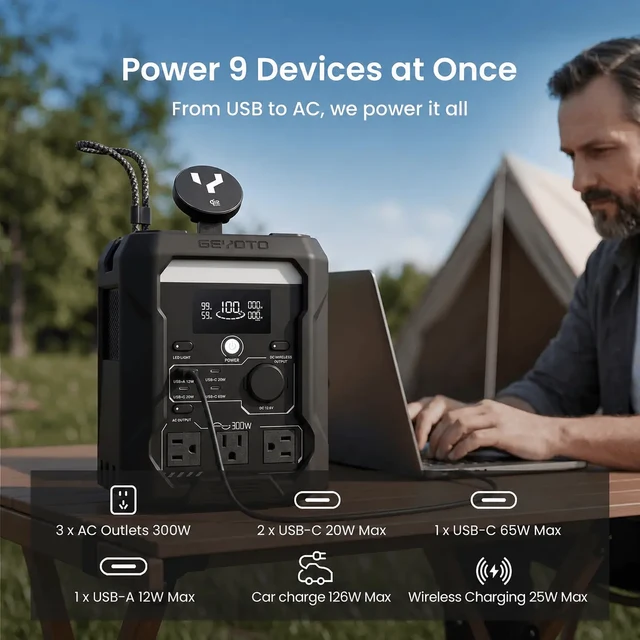
For a basic emergency setup, a smaller portable power station may be enough to keep phones, lights, routers, and small electronics running. This type of setup can be useful for short outages lasting several hours.
A medium-capacity system may be more appropriate for households that want to operate a refrigerator, communication equipment, lighting, and other essential devices for a longer period.
For extended outages, homeowners may require significantly more battery storage, a generator, solar charging capability, or a combination of backup technologies. The larger your energy demands, the more important it becomes to calculate your consumption carefully.
Instead of choosing capacity based solely on the size of your home, consider your actual emergency loads. A small home with high electricity demands may need more backup capacity than a larger home with only a few essential devices.
Battery Capacity Versus Generator Runtime
Battery systems and fuel-powered generators operate differently. A battery backup stores electricity in advance, while a generator produces electricity as long as it has an appropriate fuel supply.
A battery’s capacity determines how much energy it can provide before recharging. A generator’s runtime depends on fuel capacity, load, and efficiency.
For long hurricane outages, some homeowners combine technologies. A battery system can provide quiet power for electronics and essential devices, while a generator can handle higher loads when necessary. Solar panels may also help recharge compatible battery systems when sunlight is available after the storm.
However, every backup option has limitations. Batteries eventually need recharging, solar production depends on weather and daylight, and generators require fuel and proper ventilation. A comprehensive emergency plan should account for these limitations.
Build a Backup Power Priority List
A useful strategy is to divide your electrical needs into priority levels.
Your first priority should be life-safety and essential communication equipment. This may include medical devices, emergency lighting, phones, and communication systems.
The second priority could include food preservation, refrigeration, fans, and other equipment that supports household comfort and safety.
The third priority may include entertainment devices, computers, and other nonessential electronics.
This approach allows you to conserve stored energy when necessary. During a prolonged outage, you can focus your limited capacity on the appliances that matter most.
Plan for Longer Outages
A hurricane backup system should be selected according to realistic outage scenarios rather than ideal conditions. If you expect electricity to return within 12 hours, your requirements will be very different from those of someone preparing for several days without grid power.
Consider creating multiple plans. Your short-term plan might focus on communication, lighting, refrigeration, and essential electronics. Your extended-outage plan could include fuel management, solar charging, additional batteries, or alternative cooling and cooking methods.
It is also important to test your backup equipment before hurricane season. Confirm that batteries are charged, generators operate correctly, cables are available, and everyone in the household understands how the system works.
Final Thoughts
Determining the right backup power capacity does not have to be complicated. Start by identifying essential appliances, estimating their energy consumption, accounting for startup power, and deciding how long you need electricity during an outage. Then choose a backup solution that provides sufficient capacity while leaving a reasonable safety margin.
The most effective hurricane backup power capacity guide is one that focuses on your household’s specific needs. Rather than simply buying the biggest available system, calculate your essential energy requirements and prepare for realistic outage conditions. With careful planning, the right equipment, and regular testing, you can improve your household’s resilience and maintain access to critical electricity when a hurricane disrupts the power grid.