The question of AI versus human composition gets framed as a binary that doesn’t reflect how working professionals actually use these tools. The more useful question is: for which specific use cases does AI generation meet the standard, and where does human composition justify the higher cost and time investment?
Here’s the honest comparison.
What Does AI Generation Do Well?
Volume and consistency. An ai song generator produces multiple tracks quickly with consistent quality. A human composer working alone produces one track at a time, with variation in quality across the project. For catalog work — background music, ambient libraries, game soundtracks with many zones — AI generation serves the volume requirement that human composition can’t match economically.
Iteration speed. A brief that generates three variations in 20 minutes would require three separate human sessions to produce equivalent iterations. For early creative exploration, when you’re testing directions rather than delivering final product, AI generation’s iteration speed is a genuine advantage.
Technical execution. AI generation that accepts MIDI input executes the specific notes you input with pitch accuracy that some session musicians don’t consistently achieve on first takes. For technically demanding melodic content, the execution reliability is valuable.
Cost per track. For most commercial volume applications, AI generation costs significantly less per track than equivalent human composition and session recording.
Where Are Human Composers Irreplaceable?
The right place depends on your specific context. Narrative depth in complex creative briefs. A human composer who has been fully briefed on a film’s emotional arc, character relationships, and thematic concerns produces music that serves that narrative in ways that AI generation cannot. The music carries specific artistic intention that responds to the specific story. This depth matters for features, prestige television, and other long-form narrative work.
The unique artistic voice. A composer with a distinctive voice — one whose music is sought specifically because it sounds like them — brings irreplaceable value. AI generation can produce music in a style; it cannot produce music in a voice.
Highly irregular musical structures. Experimental composition, complex polyrhythm, unusual harmonic language, and music that deliberately violates genre conventions are areas where AI generation performs less reliably.
How Does AI Music Generator Quality Compare?
For the middle range of commercial music needs — background music, advertising, game audio, sync licensing for lower-budget productions — ai music generator quality is genuinely competitive with human composition in 2025. Buyers in those markets evaluate whether the music serves the function, not whether it was composed by a human.
For the top tier of commercial work — major label releases, prestige advertising, feature film scoring — human composition remains the standard and AI generation isn’t typically the appropriate tool.
Is the Professional Reality AI vs. Human or a Hybrid Approach?
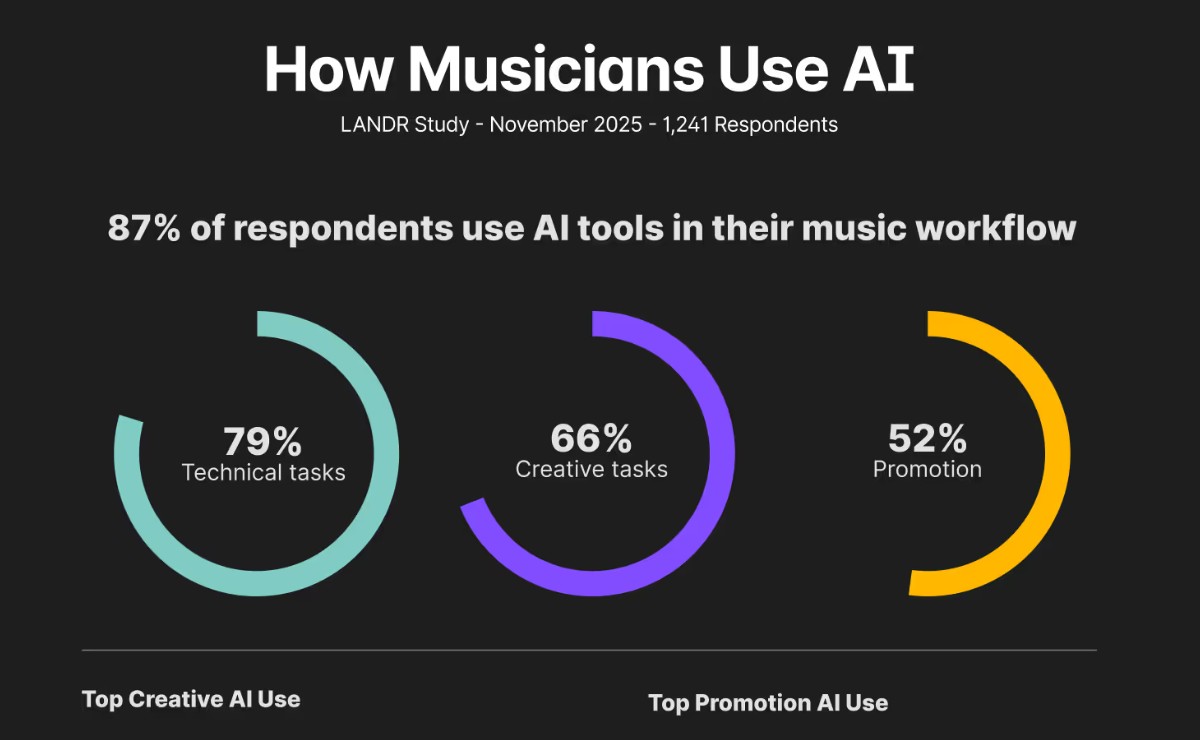
The professional reality in 2025 isn’t AI vs. human — it’s AI-assisted human composition versus non-AI-assisted human composition. Composers who use AI tools for reference generation, rapid iteration, and demo production work faster and explore more creative territory than composers who don’t.
The best commercial outcomes often come from composers using AI generation for the exploration phase and human creative judgment for the refinement phase.
How Do You Decide Between AI and Human Composition?
Choose AI generation when:
- Volume is the primary requirement
- The music is functional (background, ambient, game audio)
- Budget is constrained
- Iteration speed matters more than artistic specificity
Invest in human composition when:
- The music is the primary artistic statement
- The brief requires deep narrative response
- The composer’s unique voice is the deliverable
- The production budget supports the investment
Frequently Asked Questions
What is the 30% rule for AI?
An ai song generator produces multiple tracks quickly with consistent quality. For catalog work — background music, ambient libraries, game soundtracks with many zones — AI generation serves the volume requirement that human composition can’t match economically.
What is the best AI music generator in 2025?
For the middle range of commercial music needs — background music, advertising, game audio, sync licensing for lower-budget productions — ai music generator quality is genuinely competitive with human composition in 2025. Buyers in those markets evaluate whether the music serves the function, not whether it was composed by a human.
Is Xania Monet a real person or an AI?
An ai song generator produces multiple tracks quickly with consistent quality. For catalog work — background music, ambient libraries, game soundtracks with many zones — AI generation serves the volume requirement that human composition can’t match economically.
Will AI replace human composers?
A human composer who has been fully briefed on a film’s emotional arc, character relationships, and thematic concerns produces music that serves that narrative in ways that AI generation cannot. AI generation can produce music in a style; it cannot produce music in a voice.
What’s the Practical Guidance?
Neither tool replaces the other. The question is always fit for purpose. Most music production operations benefit from both: AI generation for the contexts where it meets the standard at better economics, and human composition for the contexts where it doesn’t. That allocation, done well, produces better creative and financial outcomes than defaulting to either tool exclusively.